


 What are two causes of xenophobia? According to Google, the most obvious motives advanced for the socio-economic causes of Xenophobia are unemployment, poverty and inadequate or lack of service delivery. These are sampled September 2019 pictures in South Africa.
The African Institute for Development Policy (AFIDEP), in partnership with the University of Southampton and local collaborators, conducted a desk-based analysis project in 2017 titled “Regional Analysis of Youth Demographics” (ReAYD) which was funded by the East African Research Fund of the United Kingdom (UK) Department for International Development (DFID).
The report added that if the levels of employment, school enrollment, and training remain the same, the projected number of people not in education, employment or training NEETS in the four East African countries will increase from 9.8 million to nearly 23 million by 2050 (Kenya, from 4.9 to 9.1 million; Tanzania, 3.1 to 9.2; Uganda, 1.5 to 4 million; and Rwanda 310,000 to 532,000). The International Labour Organization (ILO) argues that this group deserves attention since the youth are neither improving their future employability through investments in skills nor gaining experience through employment. [AFIDEP]
Alexander Chikwanda, Zambia’s finance minister, puts it succinctly: “Youth unemployment is a ticking time bomb,” which now appears to be perilously close to exploding. Mr. Chikwanda’s analogy draws attention to the consequences of high youth unemployment in a continent where about 10 million to 12 million young people join the labour market each year. [Africa Renewal]
One major challenge to regional integration is the skills gap which is often a cause of conflict/discrimination in the scramble for jobs. “Eliminate any form of discrimination in access to available jobs, particularly in the formal sector to promote equity” [AFIDEP, May 2018].
This is SoW!SE Africa’s flagship project. We appeal to all to join us in providing a soft landing to the youth through our youth facilitation “Adopt a youth Program”Further details on how this is done are available on request. Your ideas are also very welcome.Let’s team up. It only costs $50 per month per youth for a six months elaborate,practical facilitation program that unleashes talent from within the youth for a healthy, wealthy and inclusive society.Thanks in advance
In 2011, thousands of demonstrators protested in New York City’s Financial district in the famous “Occupy Wall street”.
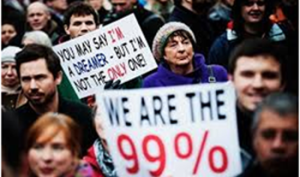 The protestors were infuriated by the growing social-economic inequality in the United States and around the world…the campaign swept the globe. “We are the 99 per cent” became the movements trademark slogan alluding the widening income gap between the societies wealthiest class the “1 Per cent” and everyone else. Median household income growth from 1967 to 2015, according to US Census Bureau data, showed 101% rise in earnings for the nation’s top 5% of earners while the lowest income earners gained a dismal 25%. Such statistics pointed to the vast wealth gap as the rich grew significantly richer and the poor stagnated. In 2016, in South Africa, the bottom 50% of earners took in only 10% of the countries net income, while the highest-earning 10% amassed 60% of it. In 2015 “1 per cent” in China owned more than 33% of the country’s wealth. Latin America according to World Economic Forum, has one of the biggest wealth gaps in the world with its richest 10% holding 71% of the regions total wealth in 2014. Such inequality, social commentators content, helped drive populist waves that crashed ashore in 2016 US Elections, the UK’s Brexit decision, a nationalist movement in Europe. [Michelle Gelfand, Rule Makers, Rule Breakers].
As a matter of principle, SoW!SE AFRICA appreciates and respects individual efforts and the
right to own personal, private property anywhere. Either way, improving on the curve is even a better, wiser, win-win option. Demonstrations, family strife and nations break ups cost lives and or resources besides the psycho-social challenges.
It’s time to leave our comfort zones, not out of fear, but in solidarity with the less privileged in the society. It is worth the effort. Please, join us as we seek and implement creative solutions from the inside out to alleviate such gaps in the society.Further details on how can be made available on request. Your thoughts are also very welcome. We all qualify to make the world a better, healthy, wealthy and inclusive place to live in. What a legacy to future generations?